
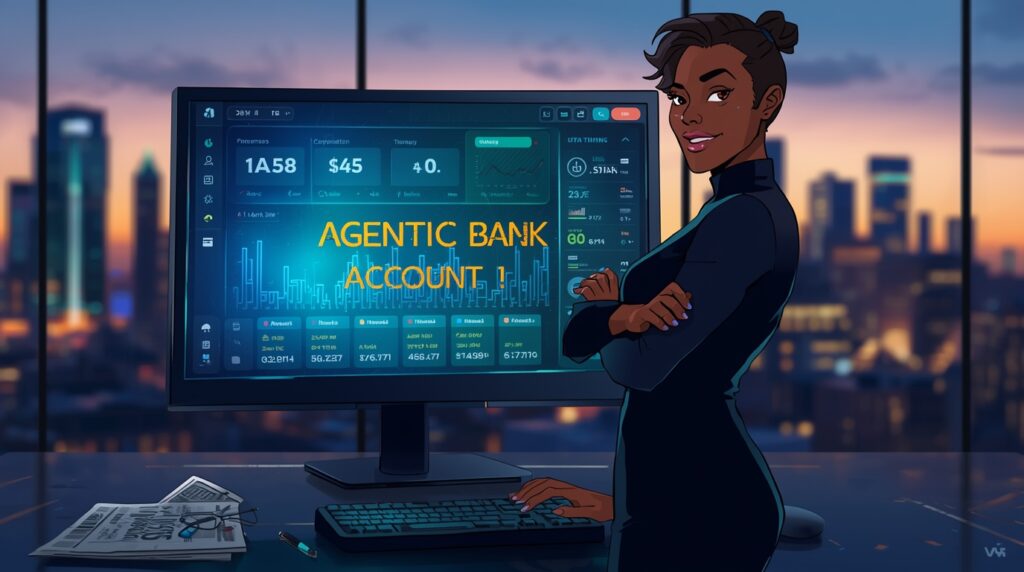

In 2025, we had “smart” apps. By 2027, we have Agentic AI. This is the difference between an app that shows you a graph of your spending and an app that actually does something about it.
Your bank account now acts as an “agent” on your behalf. If it notices your electric bill is 20% higher than last year, it doesn’t just send a notification you’ll ignore. It scans the web, finds a better provider, and asks, “Hey, I found a way to save you $40 a month. Want me to switch you over?”
-
Proactive, not Reactive: It anticipates your “broke” weeks before they happen.
-
The “Negotiator” Mode: It can actually talk to other services to lower your subscriptions.
-
The Funny Part: It’s great until your bank starts sounding like your mom: “Are we really buying a third pair of sneakers this month, Dave? We talked about this.”
Hyper-Personalization: The “Netflix-ification” of Money
Remember when every bank offer was for a credit card you didn’t want or a mortgage you couldn’t afford? In 2027, that’s gone. Banks are using Deep Behavioral Data to tailor every single pixel of your experience.
If the AI knows you’re planning a wedding (because you just spent $2,000 at a florist), it won’t show you travel insurance for a solo backpacking trip. It will show you a high-yield “HoneyMoon Fund” or a short-term loan with a “wedding-specific” grace period.
The Comparison: 2022 vs. 2027
| Feature | The “Old” Way (2022) | The 2027 Way |
| Notifications | “Transaction alert: $50 at Grocery Store.” | “You’re $20 over your food budget. Skip the organic kale?” |
| Budgeting | You manually categorize every taco purchase. | The AI automatically hides “fun money” so you don’t spend it. |
| Investing | You have to research ETFs for 6 hours. | “I’ve moved your spare $100 into a Green Tech fund. You’re welcome.” |
| Security | A text code that you have to copy-paste. | Your bank knows it’s you by the way you hold your phone. |
Financial Wellness as a Service (FWaaS)
Banks have finally realized that if you are broke, they don’t make money. So, in 2027, they are obsessed with your Financial Health Score. This isn’t just a credit score; it’s a holistic look at your “monetary fitness.”
-
Subscription Scrubbing: The AI identifies those “vampire” subscriptions—the gym you haven’t visited since the Obama administration or that streaming service you got for one show—and cancels them with a tap.
-
The “Guilt-Free” Spend: The app calculates exactly how much you need for rent, bills, and savings. Whatever is left is highlighted in green as “Safe to Spend.” No more “mismatch math” at 2:00 AM.
-
Automated Micro-Investing: It’s not just “rounding up” change anymore. The AI looks at your cash flow and says, “You have an extra $14 this week that you won’t miss. I’m putting it in your retirement account.”
The “Invisible” Security Guard
Passwords are so 2021. In 2027, security is invisible. Banks use Behavioral Biometrics. They know it’s you because of how fast you type, the angle you hold your phone, and even your heart rate (if you’re wearing a smartwatch).
If a hacker tries to log in, the AI realizes the “cadence” of the typing is wrong. It doesn’t just lock the account; it “ghosts” the hacker, showing them a fake balance of $0.00 while the authorities are notified. It’s a bit like a digital “Home Alone” trap.
The Human-AI Hybrid: When You Need a Real Person
Despite all the robots, sometimes you just need to talk to a human—especially when you’re dealing with something scary, like a mortgage or a lost inheritance.
In 2027, the “Chatbot” is actually helpful. If it can’t solve your problem in two sentences, it instantly connects you to a human who already has all your data. No more repeating your account number seventeen times to five different people.
Expert Tip: In 2027, if your bank app doesn’t have a “Life Coach” mode, you’re basically using a digital calculator. It’s time to upgrade.
Summary: Why This Actually Makes Sense
We are moving away from “managing money” to “money managing itself.” Your bank account in 2027 is designed to reduce the cognitive load of being an adult. It handles the boring stuff (taxes, bills, savings) so you can focus on the important stuff (deciding which 2027 VR game to buy).
It’s simple: The bank of the future doesn’t just hold your money; it holds your hand.

