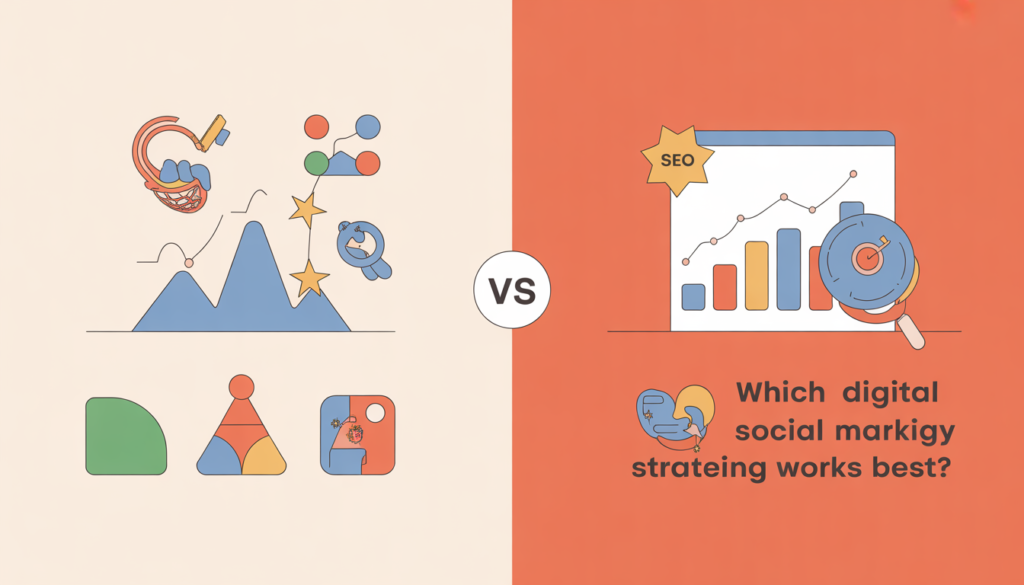

Digital marketing today feels a bit like choosing between coffee and tea.
Both wake you up.
Both have loyal fans.
And somehow, people on the internet argue about them way more seriously than necessary.
If you run a blog, business, online store, or even a YouTube channel, you’ve probably asked the classic question:
👉 Should I focus on SEO or Social Media?
Some marketers swear by Google rankings. Others chase viral reels and trending hashtags like treasure hunters searching for digital gold.
The truth? Both strategies work — but they work differently.
This detailed guide will break everything down in simple language, with real explanations, practical examples, and a little humor along the way (because marketing without humor feels like a website without Wi-Fi — technically functional but emotionally painful).
Let’s dive in.
Understanding Digital Marketing in Simple Terms
Before we compare SEO and social media, let’s understand the big picture.
Digital marketing simply means:
Using the internet to attract people, build trust, and turn visitors into customers.
Instead of billboards and newspaper ads, businesses now use:
- Search engines
- Social platforms
- Websites
- Email marketing
- Online ads
Among all strategies, SEO and Social Media Marketing are the two giants competing for attention — and budget.
What is SEO? (Search Engine Optimization Explained)
SEO sounds technical, but it’s actually simple.
SEO means helping your website appear on Google when people search for something.
Example:
Someone searches:
👉 “Best running shoes for beginners”
If your article appears on page one, congratulations — SEO is working.
How SEO Works
Search engines like Google try to show the best answers to users.
SEO helps search engines understand:
- What your content is about
- How useful it is
- Whether people trust your site
Key Elements of SEO
1. Keyword Research
Finding what people are searching for.
Example keywords:
- Cheap flights
- Fitness tips
- Digital marketing strategies
Think of keywords as questions people ask Google.
2. On-Page SEO
Optimizing your content itself:
- Titles
- Headings
- Images
- Internal links
- Content quality
Good content = happy readers + happy Google.
3. Technical SEO
The behind-the-scenes stuff:
- Fast website speed
- Mobile-friendly design
- Secure HTTPS connection
Basically, make your website easy to use.
4. Backlinks
When other websites link to you.
It’s like online popularity:
The more trusted websites recommend you, the more Google trusts you.
Advantages of SEO
- Long-term traffic
- Free visitors (after ranking)
- High trust level
- Passive lead generation
- Works 24/7
SEO is like planting a tree.
You water it today…
and months later you sit under its shade eating digital mangoes.
Disadvantages of SEO
- Takes time
- Requires consistency
- Algorithm updates can hurt rankings
- Competitive niches are tough
SEO rewards patience — not impatience.
What is Social Media Marketing?
Social media marketing uses platforms like:
- TikTok
- YouTube
- X (Twitter)
Instead of waiting for people to search, you bring content directly to them.
How Social Media Works
Social platforms show content based on:
- Engagement
- Likes
- Shares
- Watch time
- Comments
If people interact with your post, algorithms push it to more users.
Simple rule:
Engagement = Visibility.
Types of Social Media Content
- Short videos
- Reels
- Memes
- Educational posts
- Stories
- Live sessions
- Community discussions
Yes, memes are now a marketing strategy. Welcome to 2026.
Advantages of Social Media Marketing
- Fast exposure
- Brand personality building
- Direct audience interaction
- Viral potential
- Instant feedback
One good reel can bring thousands of followers overnight.
Disadvantages of Social Media
- Short content lifespan
- Constant posting needed
- Algorithm dependency
- Harder to control reach
Yesterday’s viral post becomes today’s forgotten scroll.
Social media is like fame — exciting but temporary.
SEO vs Social Media: The Core Difference
Let’s compare them side by side.
| Feature | SEO | Social Media |
|---|---|---|
| Traffic Type | Search-based | Discovery-based |
| Speed | Slow start | Fast results |
| Longevity | Long-term | Short-term |
| Effort Style | Strategic | Creative |
| Content Life | Months/Years | Hours/Days |
| Trust Level | High | Medium |
| Virality | Rare | Common |
| Stability | Stable | Algorithm dependent |
SEO = People find you.
Social Media = You find people.
Traffic Quality: Who Converts Better?
Here’s an important truth many beginners miss.
SEO Traffic
Visitors come because they are already searching.
Example:
- “Buy laptop under $1000”
This person is ready to buy.
High intent = High conversion.
Social Media Traffic
Users are browsing casually.
Example:
- Watching cooking videos
- Suddenly see your product
Interest exists, but buying intent may be lower.
Conversion Comparison
| Traffic Source | Buying Intent | Conversion Rate |
|---|---|---|
| SEO | High | High |
| Social Media | Medium | Medium |
| Viral Social | Low | Unpredictable |
SEO visitors often become customers faster.
Cost Comparison: Which is Cheaper?
Let’s talk money — everyone’s favorite topic.
SEO Costs
- Content writing
- Website optimization
- Tools
- Time investment
But once ranking happens:
👉 Traffic becomes almost free.
Social Media Costs
- Content creation
- Video editing
- Ads
- Influencer collaborations
And posting never stops.
If you stop posting… traffic stops too.
Cost Comparison Table
| Factor | SEO | Social Media |
|---|---|---|
| Initial Cost | Medium | Low |
| Long-term Cost | Low | High |
| Maintenance | Moderate | Constant |
| ROI Timeline | Slow | Fast |
SEO is an investment.
Social media is an ongoing expense.
Content Strategy Differences
SEO Content
Focuses on solving problems.
Examples:
- Guides
- Tutorials
- Reviews
- Blog articles
Long-form content wins.
Social Media Content
Focuses on attention.
Examples:
- Short videos
- Entertaining posts
- Quick tips
- Trends
Short-form dominates.
Content Mindset
| SEO Thinking | Social Media Thinking |
|---|---|
| Helpful | Entertaining |
| Informative | Emotional |
| Evergreen | Trend-based |
One teaches.
The other entertains.
The smartest marketers do both.
Time Investment: Patience vs Speed
SEO timeline:
- 3–6 months → early results
- 6–12 months → strong traffic
- 1–3 years → authority growth
Social media timeline:
- Same day → possible reach
- Weeks → audience growth
- Months → brand recognition
SEO is marathon running.
Social media is sprinting — repeatedly — forever.
Brand Building Power
Social media wins here.
Why?
Because people connect with faces, stories, and personalities.
A funny video builds emotional connection faster than a blog post.
But SEO builds credibility.
People trust websites ranked on Google more than random posts.
Best combo:
👉 Social builds personality
👉 SEO builds authority
Algorithm Dependency: The Hidden Risk
Here’s where things get interesting.
SEO Risk
Google updates algorithms occasionally.
Rankings may drop — but strong sites usually recover.
Social Media Risk
Platforms can change overnight.
Your reach can go from:
- 50,000 views
to - 500 views
without warning.
Many creators learn this the hard way.
Never build your entire business on rented platforms.
Audience Ownership: A Critical Difference
SEO gives you:
- Website visitors
- Email subscribers
- Owned audience
Social media gives you:
- Followers on someone else’s platform.
If a platform shuts down your account…
Poof.
Audience gone.
That’s why smart marketers move social followers to websites or email lists.
Best Strategy for Different Business Types
Bloggers
✅ SEO first
✅ Social media support
Blogs thrive on search traffic.
E-commerce Stores
✅ Combination strategy
SEO for product searches.
Social media for brand awareness.
Personal Brands & Influencers
✅ Social media first
✅ SEO later
Visibility matters early.
Local Businesses
✅ Local SEO + Social Media
People search AND check social proof.
Real-Life Example: SEO vs Social Media
Imagine two coffee shops.
Coffee Shop A (SEO)
- Ranks on Google Maps
- Appears for “best coffee near me”
- Gets daily steady customers
Coffee Shop B (Social Media)
- Viral TikTok videos
- Huge weekend crowds
- Quiet weekdays
Which is better?
Honestly… both together would be unstoppable.
When SEO Works Best
SEO shines when:
- People actively search for solutions
- Products need research
- Long-term growth matters
- Budget is limited long-term
Industries perfect for SEO:
- Finance
- Health
- Technology
- Education
- Real estate
When Social Media Works Best
Social media dominates when:
- Visual content matters
- Trends drive attention
- Branding is important
- Audience engagement matters
Perfect niches:
- Fashion
- Food
- Fitness
- Travel
- Entertainment
Common Mistakes Businesses Make
❌ Choosing Only One Strategy
Digital marketing isn’t a boxing match.
SEO and social media are teammates.
❌ Expecting Instant SEO Results
SEO is not microwave marketing.
It’s slow cooking.
❌ Ignoring Analytics
If you don’t measure results, you’re guessing.
And guessing is not a strategy.
❌ Posting Random Social Content
Consistency beats randomness.
How SEO and Social Media Work Together
Here’s the secret professionals use.
Social media:
👉 Drives attention.
SEO:
👉 Captures long-term traffic.
Example workflow:
- Create blog article (SEO)
- Share clips on social media
- Drive traffic back to website
- Collect email subscribers
- Build long-term audience
Now marketing works like a system instead of chaos.
The Hybrid Strategy (Best of Both Worlds)
The most successful brands combine both.
Step-by-Step Hybrid Model
- Build website foundation
- Publish SEO content weekly
- Repurpose content into social posts
- Grow followers
- Convert traffic into subscribers
- Repeat forever
Yes, marketing is basically legal repetition.
SEO vs Social Media in 2026 and Beyond
Trends show:
- Search is evolving with AI results
- Short-form video dominates attention
- Authentic brands outperform corporate voices
- Communities matter more than followers
Future winners will:
- Educate like SEO experts
- Entertain like social creators
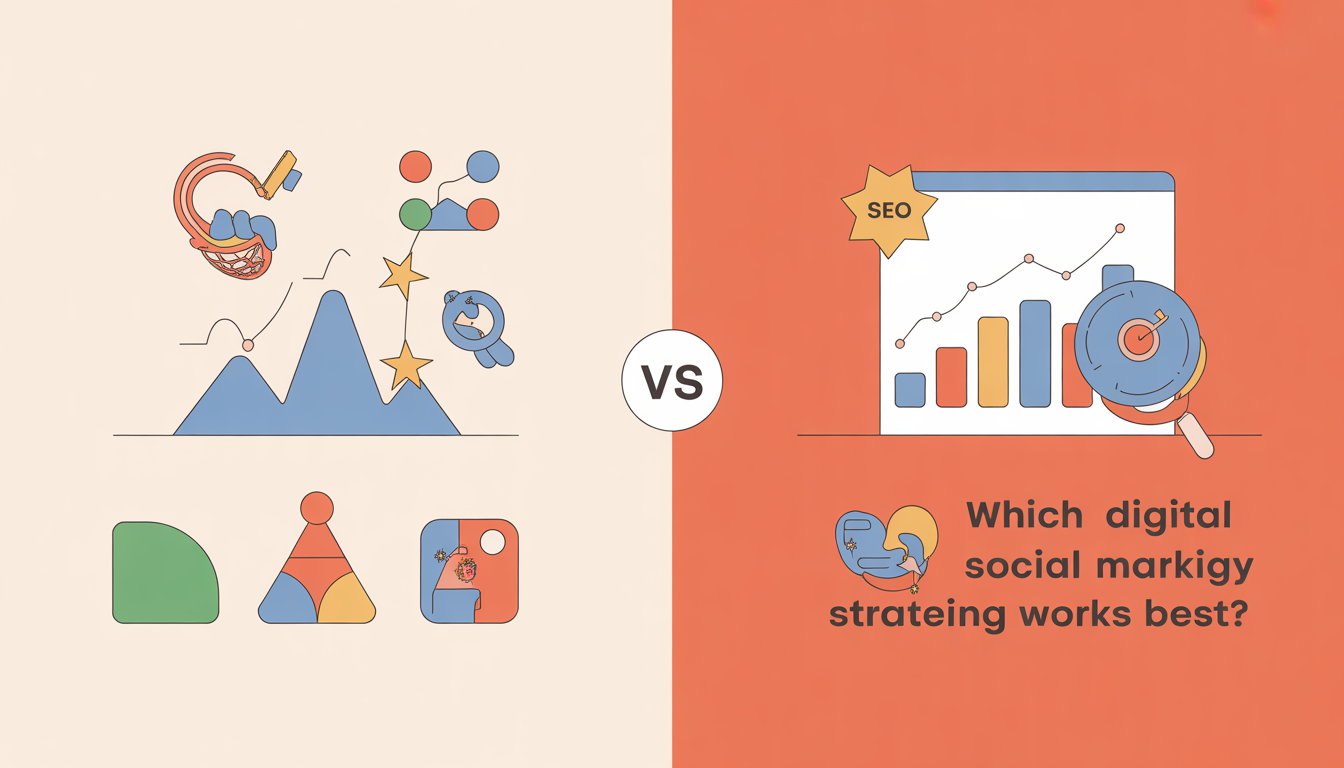
Which Strategy Works Best? The Honest Answer
Here’s the truth nobody likes because it’s not dramatic:
👉 Neither SEO nor Social Media is “better.”
They serve different purposes.
| Goal | Best Strategy |
|---|---|
| Long-term traffic | SEO |
| Fast exposure | Social Media |
| Authority building | SEO |
| Brand personality | Social Media |
| Stability | SEO |
| Virality | Social Media |
The real winner?
Integration.
A Simple Marketing Formula Anyone Can Follow
If you’re starting today:
Year 1 Focus
- 70% SEO
- 30% Social Media
Growth Stage
- 50% SEO
- 50% Social Media
Established Brand
- Full ecosystem marketing
Final Thoughts: Marketing is Not a Competition
SEO and Social Media are often treated like rivals.
But they’re more like:
- Batman and Robin
- Coffee and breakfast
- Wi-Fi and electricity
Individually useful.
Together powerful.
SEO builds your digital home.
Social media invites guests to visit.
Ignore one, and your marketing feels incomplete.